

Surinder Sharma
Russia has expressed willingness to supply discounted oil to Pakistan, but says the initiative must come from Islamabad. Russian Ambassador to Pakistan, Albert Khorev, stated that no official request has been made by Pakistan so far.
He added that if Pakistan approaches Russia, it could receive oil at lower prices. Reports suggest Russian crude is currently priced between $70 and $76 per barrel, compared to $95–$105 per barrel in the international market.
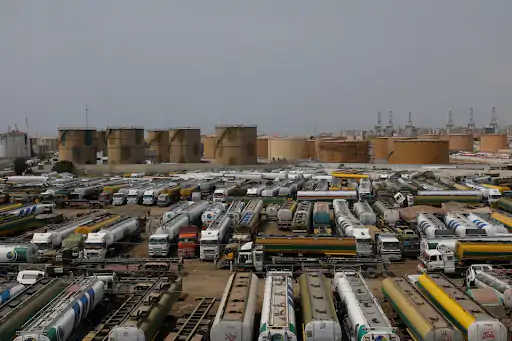
Meanwhile, Pakistan’s Petroleum Secretary informed a parliamentary committee that the country currently has only 11 days’ worth of crude oil reserves. Petrol is being sold at 321 PKR per litre, while diesel costs 335 PKR per litre.
Qatar Gas Supply Disrupted
Officials also revealed that gas supply from Qatar has nearly halted. Out of 8 LNG cargoes expected in March, only 2 have arrived, and more than half of April shipments may also be delayed. This could lead to reduced gas availability, and the government is considering conserving gas primarily for domestic use.
Government Announces Subsidy
To manage the situation, the Pakistani government has approved a subsidy of 23 billion PKR. This will benefit around 30 million motorcycle and rickshaw users. The funds will come from government savings achieved through reduced expenditures.
Authorities are closely monitoring daily oil stock levels. The Finance Minister assured that fuel supply remains stable and urged citizens not to panic-buy. The government has also warned of strict action against hoarding.
Past Challenges with Russian Oil
Russia had previously supplied oil to Pakistan in 2023, with the first shipment arriving in Karachi in June. However, the deal did not prove as beneficial as expected.
Pakistani refineries faced difficulties processing Russian crude, as it yielded less petrol and diesel while producing more furnace oil. Additionally, higher shipping costs due to long distances increased overall expenses.
Pakistan’s ports are unable to handle large oil tankers directly, requiring mid-sea transfers to smaller vessels, which further raised costs. Payments also had to be made in Chinese yuan, adding pressure amid Pakistan’s foreign exchange shortage.
Due to these challenges, Pakistan eventually halted imports. However, officials described the deal as a trial and indicated that Pakistan may reconsider if Russia offers better terms in the future.