
New Delhi: External Affairs Minister S. Jaishankar has spoken candidly about the tensions that have affected India-US relations over the past year and a half, stressing that trade differences and Pakistan-sponsored terrorism remain highly sensitive issues for India.
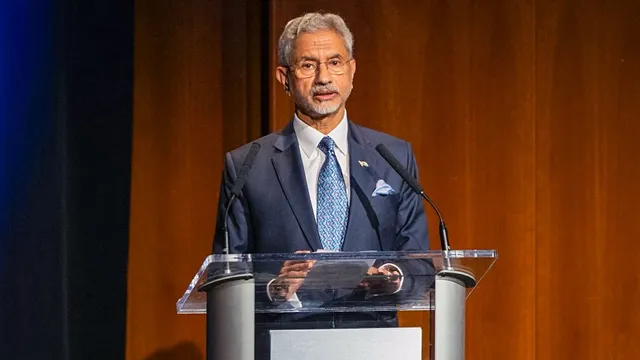
Speaking at an event organised by the Asia Society in New York on Monday, Jaishankar indicated that bilateral ties could be affected if partner countries fail to take India’s key concerns and sensitivities into account.
He placed particular emphasis on terrorism, describing it as a highly sensitive issue for India.
“It is important to be sensitive to each other’s concerns. For India, terrorism is a particularly sensitive issue. We believe there are very few countries in the world that have faced deliberately sponsored terrorism from a neighbouring country in the way that we have,” Jaishankar said.
He added that if a partner country does not take India’s major concerns into consideration, “it will have an impact on bilateral relations.”
The remarks are significant as India has, perhaps for the first time, publicly expressed its discomfort in such direct terms over the improving ties between the United States and Pakistan.
Last year, US President Donald Trump repeatedly claimed that he had helped bring an end to the India-Pakistan military confrontation in the context of Operation Sindoor. Pakistan Army Chief Asim Munir was also hosted at the White House.
India had largely refrained from publicly commenting on these developments. However, the changing US-Pakistan relationship comes at a time when New Delhi has been seeking to highlight Pakistan’s alleged support for terrorism.
India is also closely watching efforts by several European countries to strengthen diplomatic and economic engagement with Pakistan. New Delhi has expressed concern that such developments could create greater space for Pakistan to continue supporting terrorism.
Trade Deal Also Remains a Key Issue
Jaishankar also spoke about the India-US trade agreement, making it clear that India cannot compromise on its national interests.
He said the bilateral relationship would become “better” if the trade agreement is successfully concluded. He acknowledged that negotiations were expected to move quickly but had encountered difficulties.
“Remember, India is a society of small producers, small agricultural producers and small factories. Apart from the difference in per capita income between India and the US, the nature of production and the character of society are also very different,” he said.
Jaishankar stressed that completing the trade negotiations would require patience and attention to detail.
“We expected things to move quickly, but the complexity of the ground realities has emerged,” he said.
According to Jaishankar, a broad understanding on the agreement has now been reached, but finalising it is also linked to the US Section 301 process.
He acknowledged that delays in concluding the trade agreement have also given the bilateral relationship some “setbacks.”
Meanwhile, Commerce and Industry Minister Piyush Goyal is scheduled to begin a seven-day visit to the United States on Tuesday. He is expected to attend the G20 Trade Ministers’ Meeting in Milwaukee and hold discussions with US officials to advance the interim trade agreement between the two countries.